SEO Tips: A High-Quality, Practical Guide to Ranking in 2026
This is your updated, post-December 2025 Core Update playbook for modern search engine optimisation — prioritising people-first content, E-E-A-T signals, AI Overviews visibility, technical excellence, and real user satisfaction to drive sustainable traffic and conversions.
Introduction — Why SEO Still Matters in 2026
Search has evolved dramatically. Following the December 2025 Broad Core Update (completed early January 2026), Google continues to heavily reward content that genuinely helps users while demoting scaled/low-value AI content, manipulative tactics, and poor user experiences. Algorithms now deeply evaluate topical authority, user satisfaction (e.g., dwell time, pogo-sticking avoidance), E-E-A-T, and citation-worthiness for **AI Overviews** and generative answers.
This guide delivers tactical, immediately applicable steps — from intent-first research and technical foundations to content that thrives in AI-driven SERPs, trustworthy link strategies, and iterative measurement. Whether you're running a blog, agency, or enterprise site, these practices will help you build resilience against future core updates and capture visibility in traditional results + AI features.
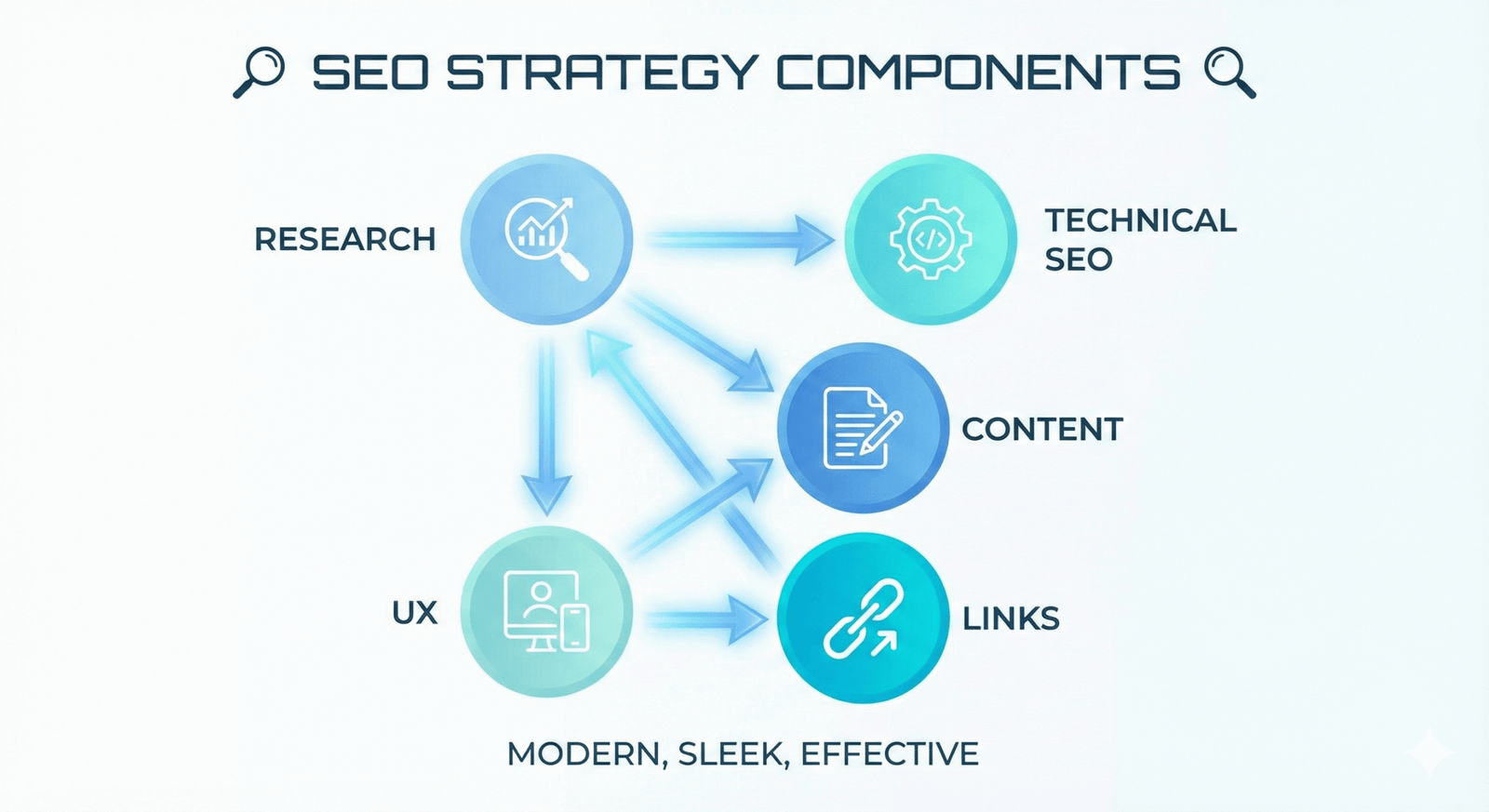
Core Principles: What Modern SEO Prioritises in 2026
Internalise these post-2025 update principles to guide every decision.
1. People-first content over everything
Google's repeated message: create satisfying content for humans, not search engines. The December 2025 update reinforced this — focus on real value, originality, and problem-solving to avoid demotions.
2. E-E-A-T is now make-or-break
Demonstrate **Experience** (first-hand knowledge), **Expertise** (credentials/sources), **Authoritativeness** (citations/recognition), and **Trustworthiness** (transparency, accuracy). Especially critical for YMYL topics and AI Overview citations.
3. Optimise for AI Overviews & generative search
Structure content for easy extraction: clear summaries, lists/tables, quote-ready facts, strong schema. Aim to be cited as a trusted source in AI answers.
4. User experience & Core Web Vitals (INP focus)
INP (Interaction to Next Paint) is key. Fast, stable, interactive sites reduce bounce rates and boost satisfaction signals that influence rankings.
5. Topical authority + freshness + measurement
Build deep topic clusters. Keep content fresh with meaningful updates. Measure real user behavior and iterate relentlessly.
Keyword Research & Topic Selection — The Right Way in 2026
Research now focuses on intent satisfaction, AI visibility potential, and cluster building.
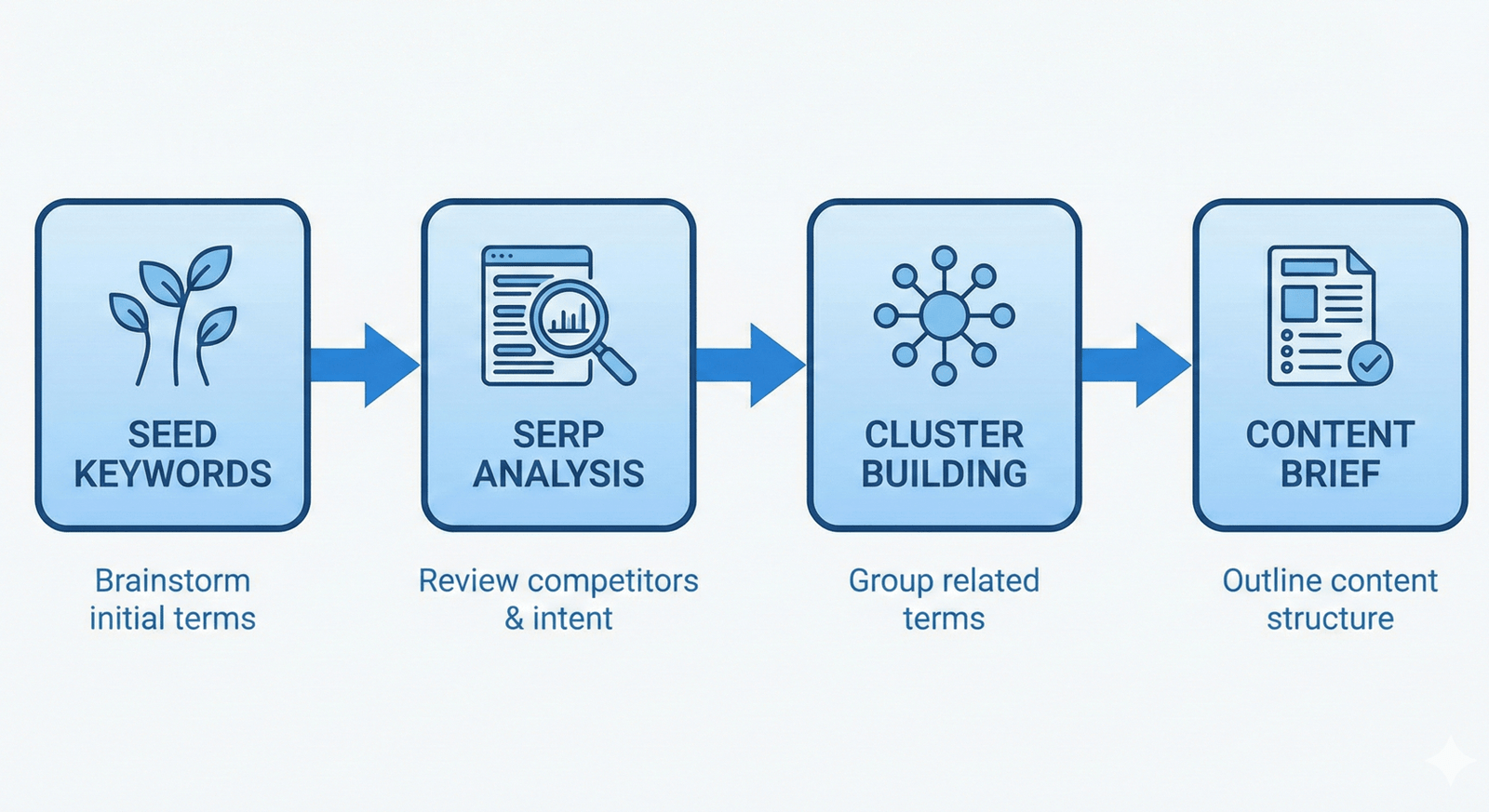
Step 1 — Align with user & business intent
Prioritise topics that solve real problems and drive revenue. Map to top/mid/bottom funnel.
Step 2 — Use hybrid tools
Combine Ahrefs/Semrush, Search Console, Surfer/Frase/NeuronWriter for semantic depth, and generative AI for ideation — always verify with real SERP analysis.
Step 3 — Analyse SERPs + AI Overviews
Check top results, featured formats, and whether AI Overviews appear. Ask: can my content be the cited source?
Step 4 — Build robust topic clusters
Pillar pages linking to deep supporting content. Include entity signals and structured data.
Tools to use
Ahrefs, Semrush, Surfer, Frase, NeuronWriter, Google Search Console, AnswerThePublic, ChatGPT/Perplexity for ideation.
Checklist
Intent-aligned, SERP/AI analysed, E-E-A-T planned, cluster + freshness strategy.
Technical SEO — Foundation for Humans & AI in 2026
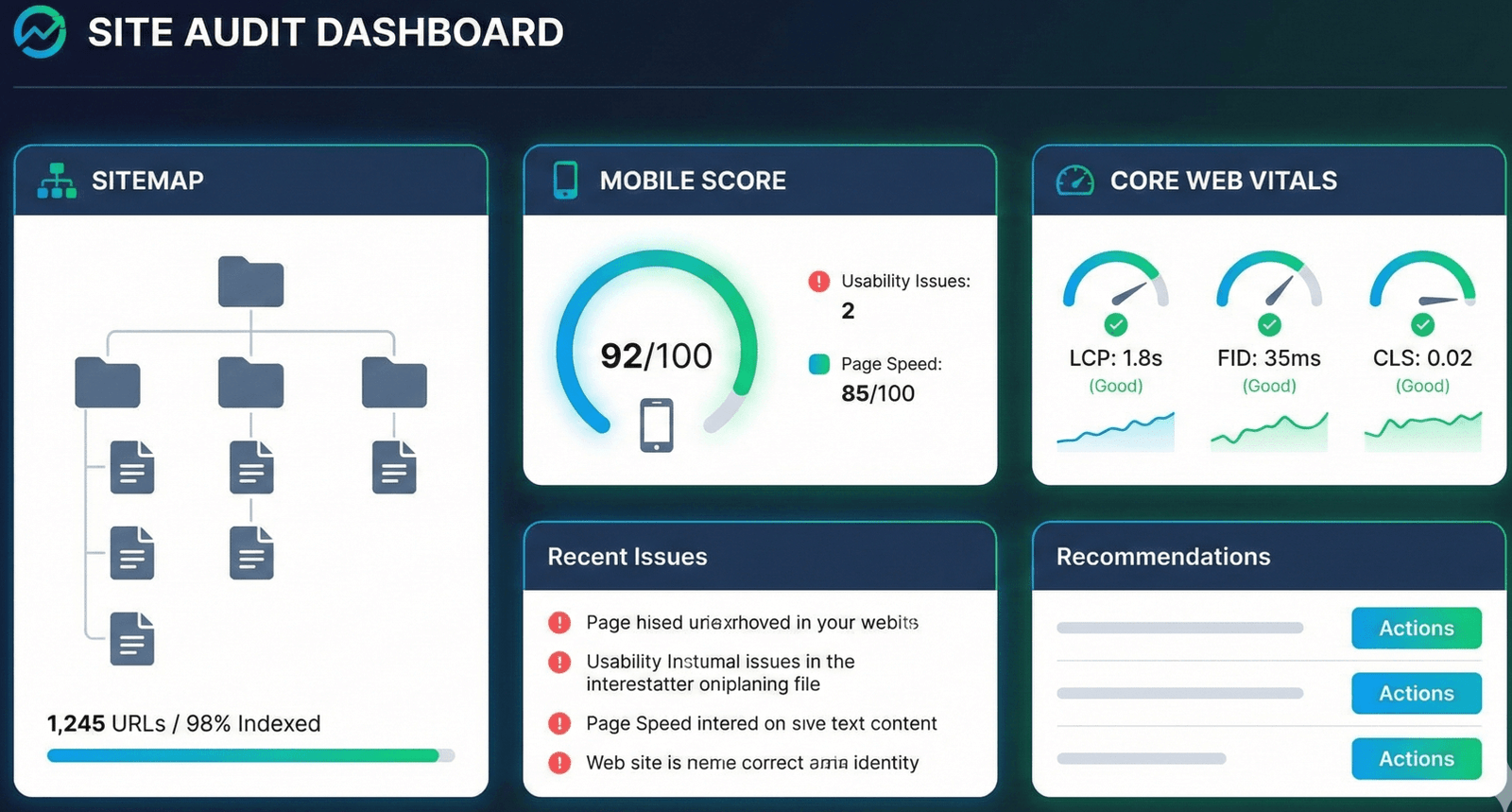
Technical health enables crawling, indexing, and AI extraction. Prioritise these high-impact items.
1. Crawlability, indexability & entity signals
Audit with Screaming Frog/Search Console. Ensure clean sitemaps, fix blocks, and build entity clarity.
2. Speed & Core Web Vitals (INP emphasis)
Optimise LCP, INP, CLS. Use next-gen images, CDN, lazy loading. Monitor via Lighthouse/PageSpeed.
3. Structured data for rich results & AI
Implement Article, FAQ, HowTo, Organization, BreadcrumbList. Helps AI understand and cite your content.
Content Strategy & On-Page Optimisation for 2026
The bar is higher: human-led, expert-driven, multi-format content wins.
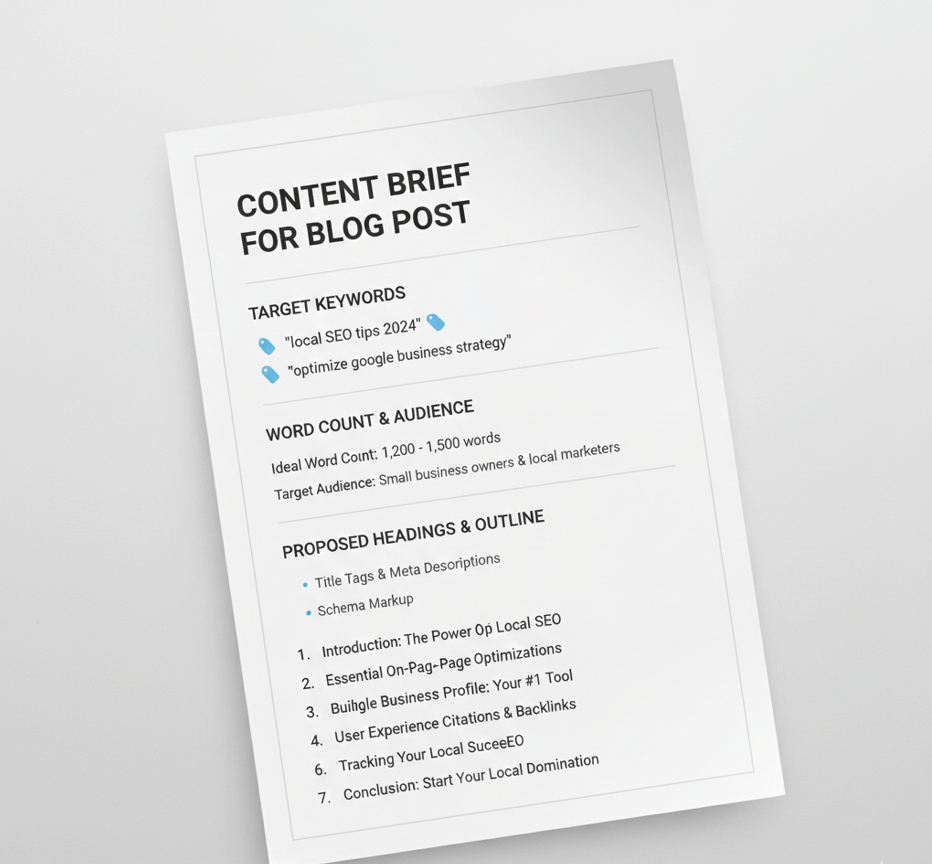
1. Data-driven briefs with E-E-A-T
Include target intent, structure, keywords, sources, author credentials, and AI-citation potential.
2. Strong openings + multimedia
Answer immediately. Add visuals, videos, tables — optimised with alt text and schema.
3. Semantic depth & freshness
Use NLP tools for coverage. Update meaningfully (new data, insights) to signal freshness.
On-page checklist
E-E-A-T proof, intent-first intro, semantic coverage, visuals/video, internal links, schema.
Tools for writing
Surfer, NeuronWriter, Frase, Writesonic/Jasper (human-reviewed), Grammarly, Hemingway.
Actionable Checklist & 90-Day Roadmap for 2026
Immediate (first 14 days)
- Technical crawl + fix indexability/Core Web Vitals issues
- Submit/update sitemap & review structured data
- Audit top pages for E-E-A-T & AI extractability
- Create briefs for 3–5 high-value cluster pieces