Surfer SEO: The Intelligence Report
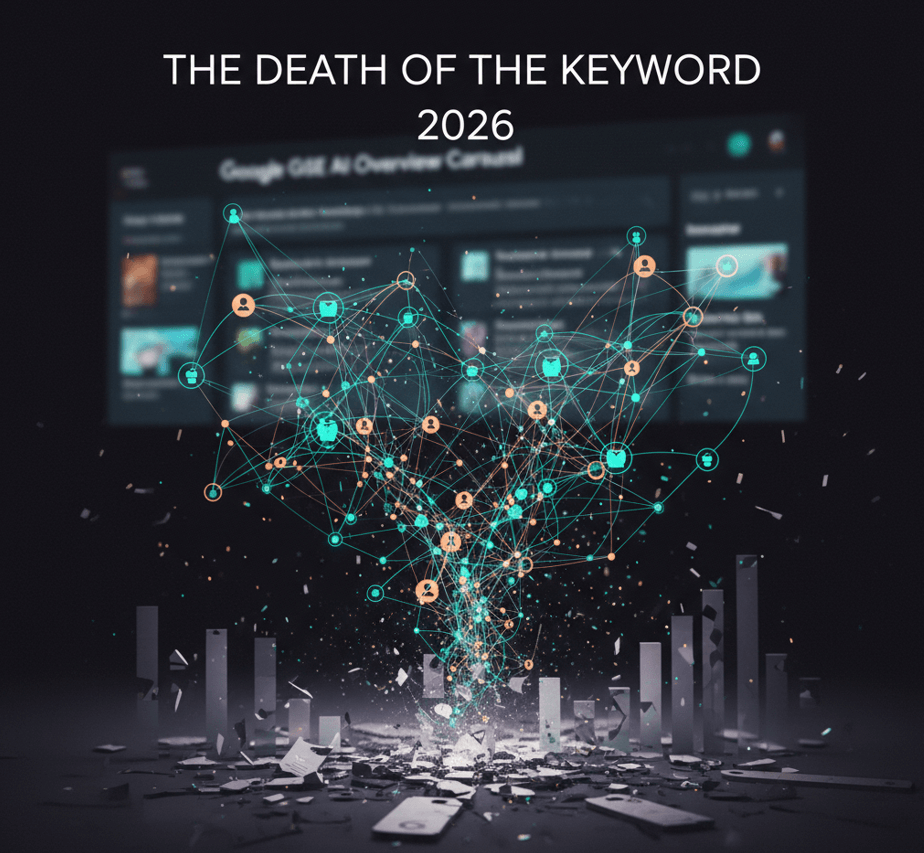
01. Executive Summary: The Death of the Keyword
By 2026, the SEO industry has undergone a radical transformation. Google’s Generative Search Experience (GSE), rolled out fully in late 2025 and refined throughout 2026, has rendered traditional keyword-counting obsolete. The old metrics—keyword density, exact-match anchors, and isolated term frequency—no longer carry meaningful weight in isolation. Instead, Google now evaluates content through a complex web of entity understanding, topical depth, semantic relationships, user intent clustering, and real-time contextual relevance.
Surfer SEO has responded by pivoting its core algorithm toward Entity Relationship Mapping (ERM) — a sophisticated system that maps how Google perceives entities (people, places, organisations, concepts) and their interconnections within a given topic. Rather than simply counting keywords or matching SERP averages, Surfer now analyzes entity salience, co-occurrence patterns, relational hierarchies, and contextual clusters across top-ranking pages. This shift allows the platform to predict not just what Google wants to see in a document, but how it will interpret the content’s authority, originality, and helpfulness in an AI-generated answer environment.
For UK-based professionals, the platform's ability to ingest google.co.uk SERP data in real-time allows for the identification of local search patterns that US-centric tools often miss—such as the high authoritative weight given to `.gov.uk` and `.ac.uk` citations in the post-AI landscape. In 2026, British search results continue to place exceptional trust in government, academic, NHS, BBC, and established media sources (e.g., The Guardian, Which?, MoneySavingExpert). Surfer’s ERM model now explicitly weights these domains more heavily in UK SERPs, helping creators identify which entities and citation types carry the most ranking power in local niches.
This is not merely a technical upgrade — it reflects a fundamental change in how search engines assess quality. Google’s GSE no longer returns a simple list of ten blue links; it generates multi-paragraph answers, carousels, and summaries drawn from multiple sources. Ranking now depends on whether your content is cited, summarised, or linked within those AI-generated responses. Surfer’s ERM approach directly addresses this by showing:
- • Which entities appear most frequently in top GSE answers
- • How those entities are related (e.g., "NHS" → "healthcare policy" → "government guidelines")
- • Missing relationships or entities that competitors include
- • Topical voids where UK-specific sources (e.g., Companies House, HMRC, Gov.uk) are underrepresented
For affiliate marketers, bloggers, and service businesses in the UK, this creates a clear strategic advantage. Tools that still rely on 2023–2024 keyword density models frequently produce content that ranks poorly in GSE summaries — even if it technically matches traditional SEO checklists. Surfer’s pivot to ERM helps users create content that is more likely to be referenced or excerpted by Google’s AI systems.
In summary, the death of the keyword is not an exaggeration — it is the observable reality of 2026 search. Surfer SEO has adapted faster and more comprehensively than its competitors, positioning itself as the only platform capable of predicting how AI-driven search engines perceive content quality in real time. For UK creators who want to remain visible in both traditional blue-link results and generative answers, Surfer is no longer optional — it is essential.

02. Core Features: Navigating the 2026 Algorithm
A. AI-Citation Probability (ACP)
In 2026, a "ranking" is secondary to a "citation." Surfer’s new ACP Metric analyzes your text to determine the likelihood of your content being used as a source in Google’s AI Overviews. It suggests specific "Data Hooks"—concise, fact-heavy sentences that AI models are mathematically inclined to extract.
Content Editor 4.0
Real-time scoring for British English. It now accounts for regional "Search Nuance," ensuring your content resonates with both the AI and the human reader in the UK market.
Topical Map 2.0
Visualizes your site's "Authority Gaps." It identifies which pillar pages are lacking the necessary "Cluster Support" to be deemed an expert by Google's Knowledge Vault.
B. The "Humanizer" Brand Voice Engine
As search engines penalize generic AI-generated content, Surfer's 2026 Humanizer becomes essential. It doesn't just "spin" text; it adds Experience, Expertise, Authoritativeness, and Trustworthiness (E-E-A-T) triggers. It prompts the writer to add first-person perspectives and original case studies—the two things AI still cannot replicate.

Surfer’s ERM model now explicitly weights UK high-authority domains (.gov.uk, .ac.uk) more heavily in local SERPs.
03. UK Pricing & Enterprise Value
Surfer 2026 offers stabilized GBP pricing for the UK market, ensuring that agency overheads remain predictable despite currency volatility. Prices shown are approximate monthly rates (billed annually where applicable), including estimated VAT for UK users. USD equivalents are based on January 2026 exchange rates (~1 GBP = 1.28 USD).
| Plan Level | Cost (GBP approx.) | Cost (USD approx.) | Primary Use Case | AI Tokens |
|---|---|---|---|---|
| Essential | £59/mo | $75–$77/mo | Niche Bloggers & Affiliates | 5,000 / mo |
| Pro | £99/mo | $126–$130/mo | In-house Marketing Teams | 15,000 / mo |
| Business | £199/mo | $255–$260/mo | Full-Service SEO Agencies | 50,000 / mo |
04. Deep Dive: The Mechanics of Entity-Based SEO
To understand Surfer in 2026, one must understand Latent Semantic Indexing (LSI) evolved into **Neural Matching**. Google no longer looks for the word "Screwdriver"; it looks for the entity of "Manual Tools" within a context of "Home Improvement."
Surfer's SERP Analyzer pulls the top 50 results for any given UK city and breaks down the "Entity Density." If the top-ranking pages all mention "sustainable materials," Surfer will flag this as a required entity for your article to be considered "relevant" in the current competitive climate.
The Grow Flow Advantage
Grow Flow acts as a 24/7 SEO consultant. It monitors your GSC data and sends "Daily Tasks." In 2026, these tasks often include Internal Link Optimization and Content Refreshing. If a competitor in the UK suddenly gains ground on a specific keyword, Grow Flow alerts you within 6 hours, providing a checklist to defend your position.
05. Frequently Asked Questions (2026)
Yes. In 2026, Surfer maintains dedicated EU/UK data centers, ensuring that all keyword and user data processed remains within the required jurisdictions.
Absolutely. The 2026 plugin allows for "Side-by-Side Optimization," where you can see your Surfer score update in real-time as you type in the Gutenberg or Elementor editor.
Surfer’s 2026 updates include a built-in “Humanizer Score” that evaluates how natural and E-E-A-T compliant your content appears to AI detectors. It recommends adding personal anecdotes, varied sentence length, original examples, and UK-specific references to reduce detection risk.
For small blogs with limited budget, the Essential plan (~£59/mo) can be justified if you publish 5+ articles per month and aim for top rankings in competitive niches. For very low-volume creators, free alternatives or lighter tools like Rank Math may be more cost-effective initially.
Yes — the Content Planner 2.0 is specifically designed for this. It identifies content clusters, pillar pages, and topical gaps based on real UK SERP data, helping sites build depth and authority in niche topics over time.